
View Project or Customer Profitability in Zoho Books
As a growing business, you would have a rapidly expanding customer base spread across several domains and locations. It becomes confusing when you generate a report, as it fetches information about all the customers. Zoho Books allows you to generate filtered reports based on short keywords called Reporting Tags.
You can create and associate Reporting Tags with transactions created in Zoho Books. Once you associate the tag(s) with multiple transactions over a period of time, it will be easy for you to generate reports for transactions based on the particular tag(s).
Let us consider an example where you have a lot of business coming from different car rental companies. Whenever you create an invoice for such companies, you can associate a tag say, ‘Car Rental’ to it. Later on, if you’d like to look up transactions made for car rental companies, all you have to do is generate a financial report based on the tag ‘Car Rental’. You can also go one step further to see your payables and receivables based on say, your Region. You could add location tags such as New York, Texas, California, etc., to see transactions that have been created for customers in these regions.
Create a Reporting Tag
To create a reporting tag, click on the Gear icon on the top right corner of your Zoho Books screen.
Navigate to More Setting -> Reporting Tags and click on the + New Tag button.
In the pop-up that follows, enter the Tag Name.
Under Options, you may enter the names of different cities, departments, categories etc. based on your requirement.

Click on Save to save the tag.
Associate a Tag with a Transaction
You can associate tags with Sales and Purchases transactions such as invoices an expenses. For example, while creating an invoice:
Click on the small ‘Circle’ icon on the New Invoice screen next to the Item Amount column.

Clicking on the icon will bring the Additional information pop-up where you can associate the tags you wish to for this transaction.
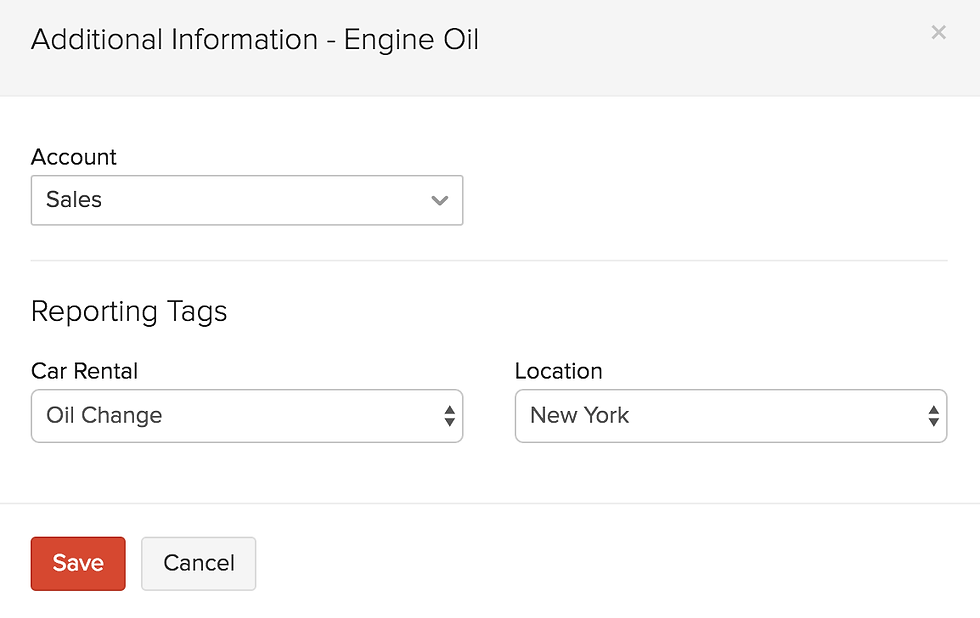
Click on Save to finish.
Associate a Tag with a Contact or Item
You can associate Reporting tags with a Contact or an Item and it will automatically get added to the invoice when the particular customer or the item is included in the invoice.
Associate a tag for a contact:
While creating/editing contacts, scroll down, select the Reporting Tags tab and choose one of the options for the reporting tags that you had created earlier.

Associate a tag for an item:

You can associate a tag while adding or editing an item in the Item Details screen.
Generate Reports
One of the most useful features of having reporting tags is the option to generate Business Overview reports including Profit and Loss, Cash Flow Statement and Balance Sheet based on the tags that have been created and associated to transactions.
Navigate to the Reports module and select one of the reports under the Business Overview section.
Select the Customize Report option under the search bar.
You will see that the reporting tags that you have created are listed here. Select one of the options from the drop-down for each of these reporting tags.

Finally, click on Run Report to generate a report based on the criteria you’ve set.


The RICS preliminary review can refer to the initial review of a candidate's qualifications, experience, and suitability for an RICS assessment route. Depending on the candidate's circumstances and chosen pathway, RICS requirements may include academic qualifications, relevant professional experience, competency requirements, professional conduct, and Continuing Professional Development (CPD). Candidates should check the current RICS guidance for their specific pathway because eligibility and assessment requirements can vary.
Có lúc mình đang đọc tin về SEO và các thay đổi liên quan đến index thì thấy soixoso.net xuất hiện trong danh sách mình đang xem. Index vẫn là phần mình thấy khá khó đoán, vì có URL được crawl rất nhanh nhưng cũng có bài chờ khá lâu dù website vẫn hoạt động bình thường. Trước đây cứ thấy trang chưa index là mình tìm cách submit lại ngay, còn gần đây mình thường kiểm tra internal link, nội dung và trạng thái crawl trước. Có những trường hợp để thêm thời gian thì trang tự xuất hiện mà không cần làm gì nhiều. Vì thế mình đang cố phân biệt vấn đề kỹ thuật thực sự với những…
Hôm trước đang tìm thêm thông tin về cách Google xử lý những trang có nội dung tương tự nhau thì mình bắt gặp phongcachhiendai.net. Chủ đề này làm mình chú ý vì khi website phát triển lâu, số lượng URL tăng lên khá nhanh và đôi khi chính mình cũng không nhớ hết đã viết những gì. Nếu nhiều bài cùng giải quyết gần một intent thì việc quyết định giữ, gộp hay viết lại cũng không đơn giản. Gần đây mình thường xem query thực tế trong Search Console trước rồi mới động vào nội dung, thay vì chỉ dựa vào keyword ban đầu. Cách này giúp nhìn rõ hơn Google đang hiểu từng URL theo hướng nào.…
Mình tình cờ gặp echoreach.net trong lúc đang xem một số tin tức và thảo luận mới về SEO. Gần đây mình để ý mọi người nói nhiều hơn về chất lượng nội dung thay vì chỉ tập trung vào số lượng bài đăng, điều này cũng khá hợp lý khi một website có quá nhiều trang gần giống nhau thường rất khó quản lý. Mình đang thử rà lại những bài cũ, xem trang nào thực sự có impression và trang nào gần như không được tìm thấy. Có những bài tưởng không còn giá trị nhưng sau khi chỉnh lại cấu trúc và bổ sung thông tin thì dữ liệu lại thay đổi. Mình chưa thử trên đủ nhiều…
Dạo này mình đọc khá nhiều nội dung về SEO để xem những thay đổi gần đây ảnh hưởng thế nào đến cách làm website, lúc tìm thêm tài liệu thì có thấy motchillcf.net được nhắc đến. Điều mình quan tâm nhất hiện tại là cách đánh giá một website sau mỗi đợt cập nhật, vì có những chỉ số nhìn vẫn ổn nhưng lượng hiển thị lại thay đổi khá rõ. Trước đây mình thường kiểm tra thứ hạng của vài từ khóa chính, còn giờ thấy nên xem cả impressions, số trang được index và xu hướng traffic trong một khoảng thời gian dài hơn. SEO càng làm lâu càng thấy khó kết luận chỉ từ một vài ngày…